


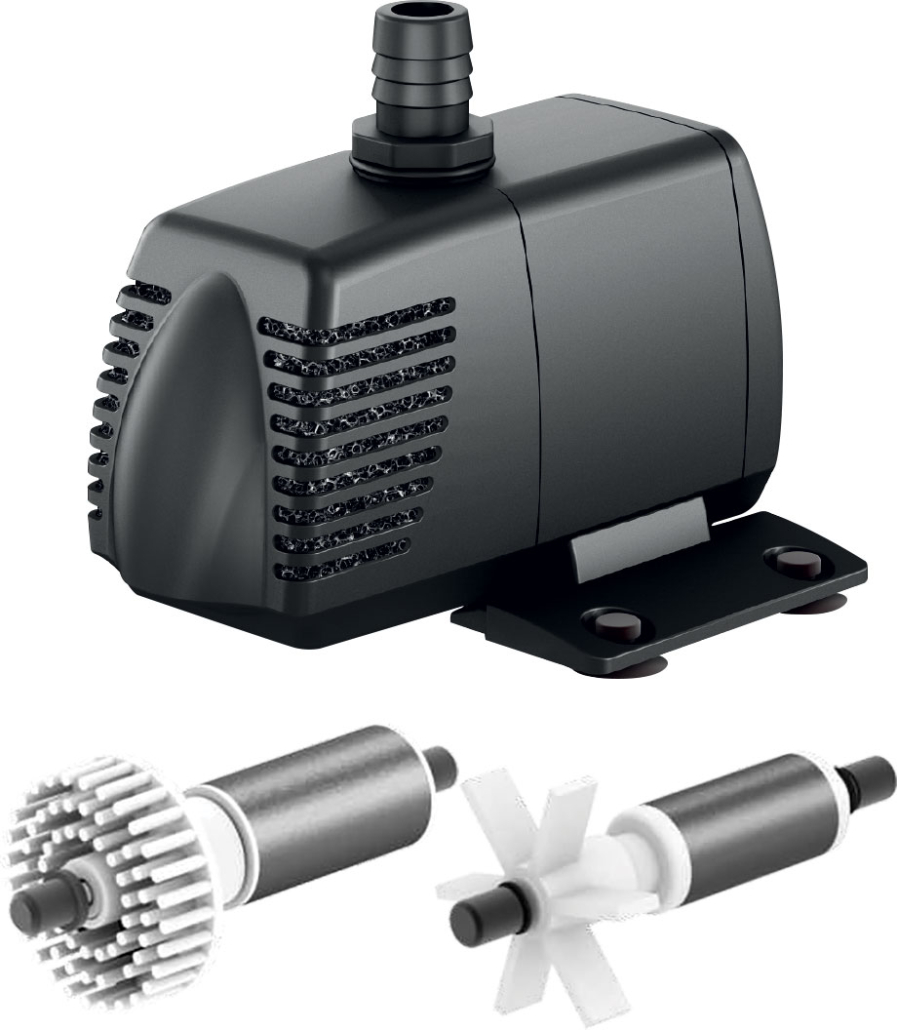
Reef Power 600-1600-2200-2600-3500
User manual
Installation
- Rinse the pump and all parts with clean tap water before installation.
- Install the pump and connect it to the hose as required.
- Start the pump by plugging in the power cable. Ensure a proper drip loop is present.
- The ReefPower is equipped with thermal protection against overheating (except the ReefPower 600). If the pump overheats, it will automatically stop. Disconnect it from the power supply, allow it to cool down, and restart after at least 1 hour. Always identify and resolve the cause of overheating, as repeated overheating may damage the pump.
Maintenance
- In marine environments, limescale and salt deposits can quickly build up and affect pump performance.
- Regular cleaning is required to ensure proper operation.
- Disconnect the pump from the mains before performing any maintenance.
- Open the pump and remove the impeller and ceramic shaft.
- Clean the impeller and shaft using a 50% vinegar and 50% water solution. Let them soak for at least 15 minutes. Check that the impeller rotates freely on the shaft. In some cases, longer soaking may be required to remove all deposits.
- Reassemble the shaft and impeller, ensuring that the shaft caps are properly installed.
- The impeller is a wear part and, depending on usage, should be replaced annually. This is considered normal maintenance and is not covered under warranty. Replacement impellers are available from your dealer.
Installation
- Rinse the pump and all parts with clean tap water before installation.
- Install the pump and connect it to the hose as required.
- Start the pump by plugging in the power cable. Ensure a proper drip loop is present.
- The ReefPower is equipped with thermal protection against overheating (except the ReefPower 600). If the pump overheats, it will automatically stop. Disconnect it from the power supply, allow it to cool down, and restart after at least 1 hour. Always identify and resolve the cause of overheating, as repeated overheating may damage the pump.
Maintenance
- In marine environments, limescale and salt deposits can quickly build up and affect pump performance.
- Regular cleaning is required to ensure proper operation.
- Disconnect the pump from the mains before performing any maintenance.
- Open the pump and remove the impeller and ceramic shaft.
- Clean the impeller and shaft using a 50% vinegar and 50% water solution. Let them soak for at least 15 minutes. Check that the impeller rotates freely on the shaft. In some cases, longer soaking may be required to remove all deposits.
- Reassemble the shaft and impeller, ensuring that the shaft caps are properly installed.
- The impeller is a wear part and, depending on usage, should be replaced annually. This is considered normal maintenance and is not covered under warranty. Replacement impellers are available from your dealer.
Technical data:
| Model | Power | Flow Rate | Jet | Inlet | Outlet |
|---|---|---|---|---|---|
| ReefPower 600 | 10 Watt | 660 L/h | 1.1 m | 19 mm | 9 mm |
| ReefPower 1600 | 20 Watt | 1560 L/h | 1.7 m | 19 mm | 19 mm |
| ReefPower 2200 | 30 Watt | 2250 L/h | 2 m | 25 mm | 19 mm |
| ReefPower 2600 | 35 Watt | 2800 L/h | 2 m | 25 mm | 25 mm |
| ReefPower 3500 | 45 Watt | 3240 L/h | 2.4 m | 25 mm | 25 mm |